Jeonguk Kang
AI/Robotics Engineer at Samsung Electronics. My work focuses on humanoid whole-body control, reinforcement learning, and sim-to-real adaptation for real-world robotic systems.
- 2026. 01 - Present: Staff Engineer, Samsung Electronics, Future Robot AI Group
- 2025. 03 - 2025. 12: Staff Engineer, Samsung Electronics, Samsung Research
- 2024. 03 - 2025. 02: Post-doctoral Researcher, Korea Institute of Science and Technology (KIST)
- 2020. 03 - 2024. 02: Ph.D. in ME, Korea Advanced Institute of Science and Technology (KAIST)
- 2018. 03 - 2020. 02: M.S. in ME, Korea Advanced Institute of Science and Technology (KAIST)
- 2013. 03 - 2018. 02: B.S. in ME, Korea Advanced Institute of Science and Technology (KAIST)
Research Keywords : Humanoids and Quadrupeds, Whole-Body Control, Loco-Manipulation, Sim-to-Real Adaptation, Reinforcement Learning, State Estimation, Model Predictive Control (MPC)
Research
-
SplitAdapter: Load-Aware Humanoid Loco-Manipulation via Factorized Adaptation
Jeonguk Kang, Hanbyel Cho, Sanghyun Kang, Donghan Koo
arXiv Preprint, 2026Humanoid loco-manipulation requires stable whole-body control under varying object masses and pickup/placement heights. This becomes particularly challenging in sim-to-real transfer, where object-induced load variation and robot-side dynamics mismatch interact during physical contact. Existing history-based adapters often compress these factors into a single latent representation, which can weaken robustness under heavy-load manipulation. We propose SplitAdapter: Load-Aware Humanoid Loco-Manipulation via Factorized Adaptation, which freezes a pretrained box manipulation policy and extends it with object/load and dynamics-aware context encoders trained with split world-model objectives, GRL-based cross-adversarial regularization, and hierarchical Feature-wise Linear Modulation (FiLM). In sim-to-sim experiments and real-world deployment, SplitAdapter improves Full-task success over the base policy and world-model FiLM baselines across object masses of 2, 4, and 6 kg and pickup/placement heights of 0, 30, and 60 cm, with the largest improvements under heavy-load conditions. -
SafeFlow: Real-Time Text-Driven Humanoid Whole-Body Control via Physics-Guided Rectified Flow and Selective Safety Gating
Hanbyel Cho, Sang-Hun Kim, Jeonguk Kang, Donghan Koo
arXiv Preprint, 2026Recent advances in real-time interactive text-driven motion generation have enabled humanoids to perform diverse behaviors. However, kinematics-only generators often exhibit physical hallucinations, producing motion trajectories that are physically infeasible to track with a downstream motion tracking controller or unsafe for real-world deployment. These failures often arise from the lack of explicit physics-aware objectives for real-robot execution and become more severe under out-of-distribution (OOD) user inputs. Hence, we propose SafeFlow, a text-driven humanoid whole-body control framework that combines physics-guided motion generation with a 3-Stage Safety Gate driven by explicit risk indicators. SafeFlow adopts a two-level architecture. At the high level, we generate motion trajectories using Physics-Guided Rectified Flow Matching in a VAE latent space to improve real-robot executability, and further accelerate sampling via Reflow to reduce the number of function evaluations (NFE) for real-time control. The 3-Stage Safety Gate enables selective execution by detecting semantic OOD prompts using a Mahalanobis score in text-embedding space, filtering unstable generations via a directional sensitivity discrepancy metric, and enforcing final hard kinematic constraints such as joint and velocity limits before passing the generated trajectory to a low-level motion tracking controller. Extensive experiments on the Unitree G1 demonstrate that SafeFlow outperforms prior diffusion-based methods in success rate, physical compliance, and inference speed, while maintaining diverse expressiveness. -
ADP: Adversarial Dynamics Priors for Physically Grounded Humanoid Locomotion
Seokju Lee, Jeongtae Lee, Jeonghyeok Lim, Jeonguk Kang, Byungwook Lee, Seungho Han, Keun Ha Choi, Dongil Park, Kyung-Soo Kim
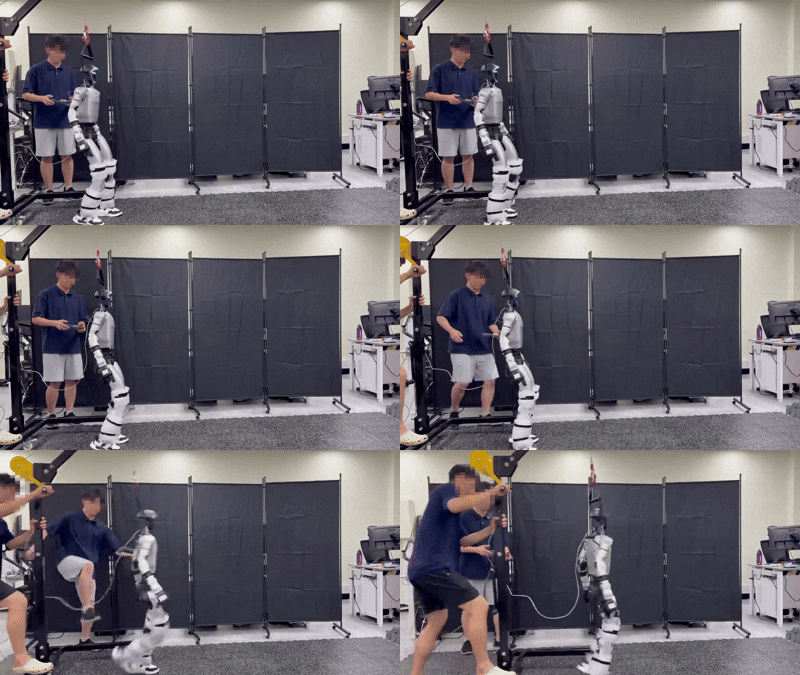
arXiv Preprint, 2026In this paper, we propose Adversarial Dynamics Priors (ADP) for perturbation-resilient humanoid locomotion control. Existing motion prior-based methods induce natural motion styles by imitating kinematic motion features, but they do not directly regularize dynamics features, such as CoM motion, centroidal momentum, contact forces, and contact states. To address this limitation, we replace kinematic motion-style feature with selected dynamics features extracted from locomotion trajectories as the target of adversarial regularization. To this end, we use trajectory optimization to construct a reference dataset and train a discriminator to evaluate whether policy-induced temporal windows are consistent with the resulting reference distribution. Without explicit motion tracking, ADP encourages policy rollouts to remain close to the reference support, even after perturbations. Experimental results show that, compared with AMP, the strongest baseline in our evaluation, ADP improves the 80%-success impulse threshold (J80) by 16.7%, while reducing direction-averaged recovery time and velocity tracking error by 47.9% and 35.4%, respectively. -
Toward Daily-Life Sarcopenia Identification via Real-Time Gait Assessment Using a Wearable Hip Assistive Robot
Sangdo Kim, Sunwoo Kim, Jeonguk Kang, Robin Inho Kee, Kyung-Ryoul Mun, Yisoo Lee, KangGeon Kim, Youngsu Cha, Jongwon Lee
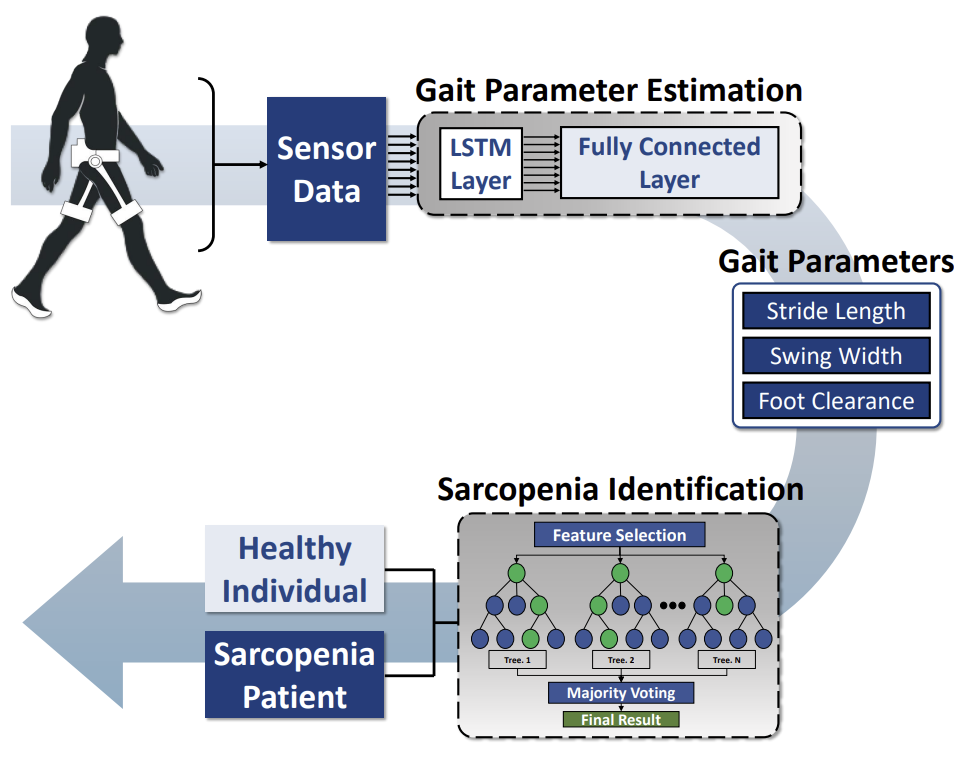
Under reviewWearable gait assist robots offer a promising platform for gait monitoring while simultaneously supporting walking assistance. However, existing gait assessment methods often rely on laboratory-based systems or manually attached body sensors, limiting their practicality for daily-life monitoring and early detection of mobility decline. In this study, we propose a wearable robot-based gait assessment framework for spatial gait parameter estimation and sarcopenia identification using robot-mounted sensors and instrumented insoles. Multimodal sensor signals, including hip flexion-extension encoder signals, trunk IMU, and insole IMU signals, were integrated using a lightweight single-layer LSTM model to estimate stride length, swing width, and foot clearance on a stride-by-stride basis. The estimated gait parameters were then combined with sensor-derived statistical features for sarcopenia identification using a Random Forest classifier. Experiments with healthy individuals and sarcopenia patients under treadmill and overground walking conditions showed robust estimation performance, with stride length errors below 6.9 cm and swing width and foot clearance errors generally within 0.8-1.5 cm. Incorporating model-estimated gait parameters improved sarcopenia identification, achieving a stride-wise accuracy of 90.17%. The trained framework was further deployed on an embedded wearable robot platform, demonstrating the feasibility of stride-wise real-time gait assessment and sarcopenia screening for future daily-life applications. These results suggest the potential of wearable robotic systems for future continuous mobility monitoring and early identification of age-related gait impairments. -
(Accepted) Optimal Load Distribution Strategy via Knee-Hip Coordinated Control for Heavy Load Lifting Assistance in Wearable Robots
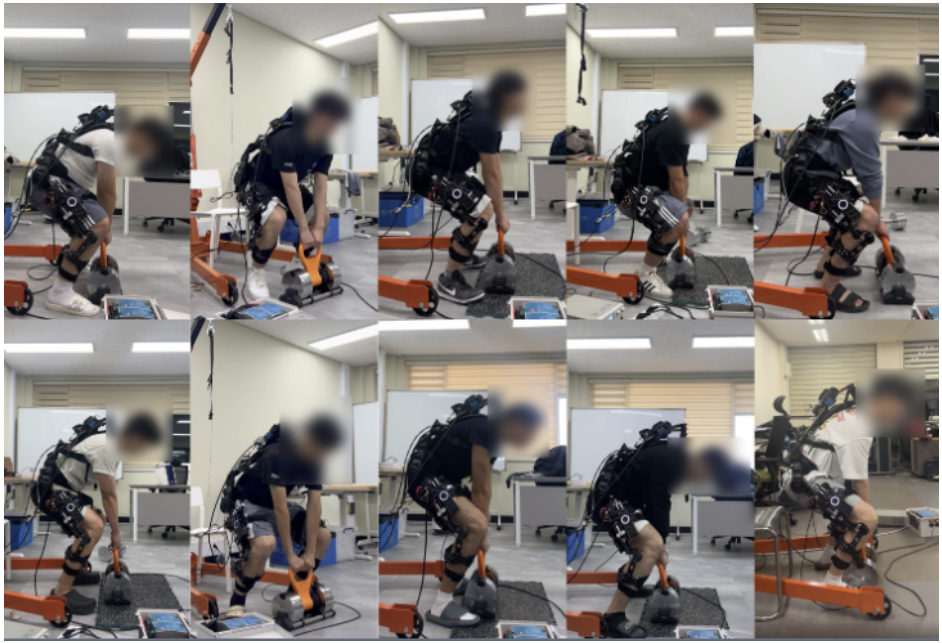
Byungwook Lee, Jeonguk Kang, Seokju Lee, Kwang Woo Jeon, Tae-Hwan Kim, Hyun-Joon Chung, Man Bok Hong, Jang Sik Park, Kyung-Soo Kim
IEEE/RSJ International Conference on Intelligent Robots and Systems (IROS), 2026 -
RAY-TOLD: Ray-Based Latent Dynamics for Dense Dynamic Obstacle Avoidance with TDMPC
Seungho Han, Seokju Lee, Jeonguk Kang* (*Corresponding author)
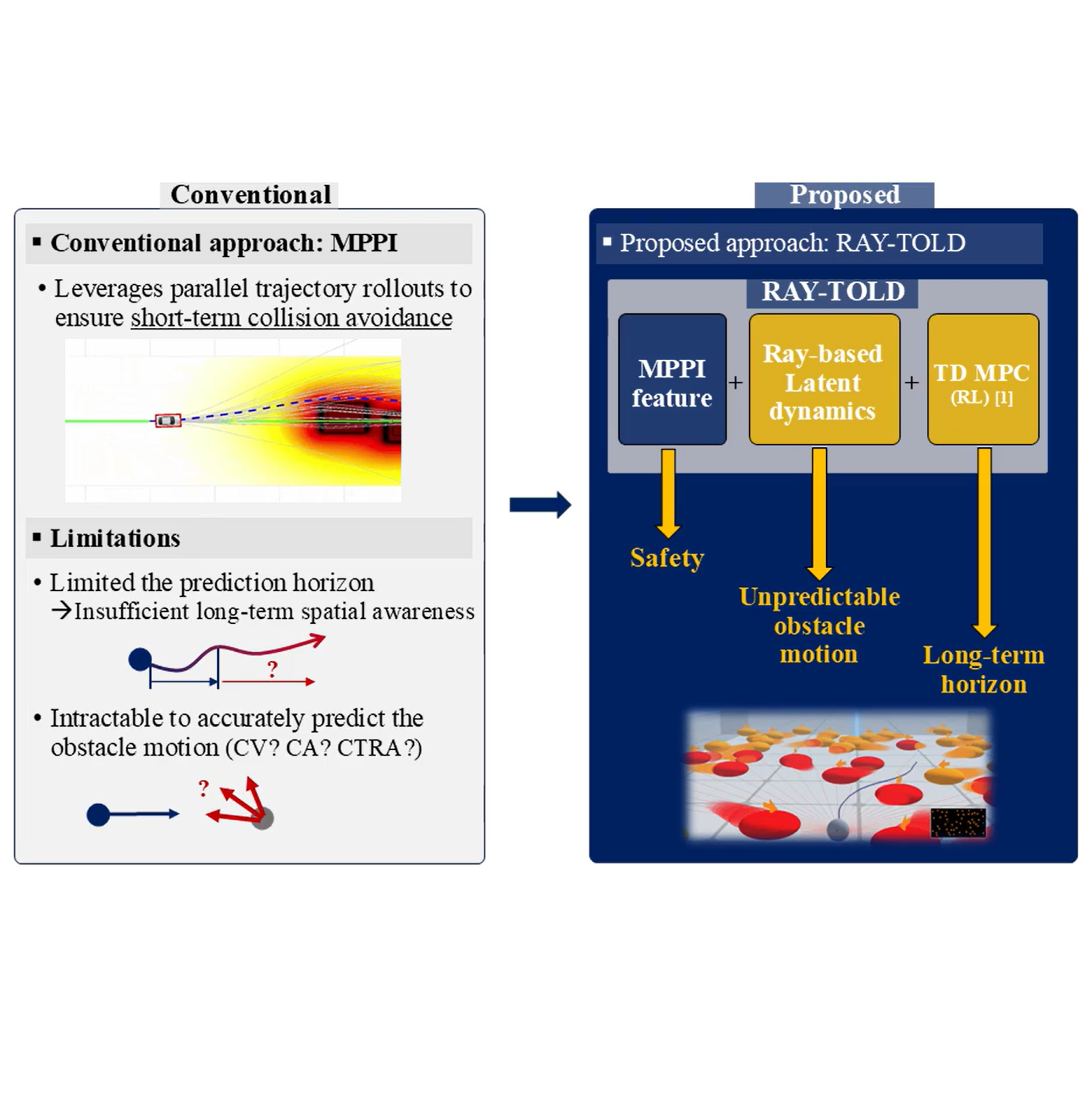
arXiv Preprint, 2026Dense, dynamic crowds pose a persistent challenge for autonomous mobile robots. Purely reactive planning methods, such as Model Predictive Path Integral (MPPI) control, often fail to escape local minima in complex scenarios due to their limited prediction horizon. To bridge this gap, we propose Ray-based Task-Oriented Latent Dynamics (RAY-TOLD), a hybrid control architecture that integrates obstacle information into latent dynamics and utilizes the robustness of physics-based MPPI with the long-horizon foresight of reinforcement learning. RAY-TOLD leverages a LiDAR-centric latent dynamics model to encode high-dimensional sensor data into a compact state representation, enabling the learning of a terminal value function and a policy prior. We introduce a policy mixture sampling strategy that augments the MPPI candidate population with trajectories derived from the learned policy, effectively guiding the planner towards the goal while maintaining kinematic feasibility. Extensive tests in a stochastic environment with high-density dynamic obstacles demonstrate that our method outperforms the MPPI baseline, reducing the collision rate. The results confirm that blending short-horizon physics-based rollouts with learned long-horizon intent significantly enhances navigation reliability and safety. -
(Accepted) 4D Radar-Camera Based Vector Map SLAM Using Dynamic Object Removal Mask
Minseong Choi, Seungho Han, Jeonguk Kang, Seunghoon Yang, Minyoung Lee, Keun Ha Choi, and Kyung-Soo Kim
IEEE Transactions on Instrumentation and Measurement (TIM), 2026To perform global or local path planning for autonomous driving, a vector map containing lane information is required. Vector maps, which is also called HD maps, are typically developed using expensive LiDAR or a combination of cameras and deep learning. In this paper, a real-time vector map SLAM using the emerging 4D radar and low-cost cameras is proposed. First, Dynamic Objects Removal Mask (DORM) based visual-4D radar odometry is suggested, which is robust under dynamic environments like urban areas. Experimental results demonstrated better performance in dynamic scenarios compared to state-of-the-art LiDAR SLAM and other techniques. Secondly, a double check loop detection method is proposed using the vector map generated by Inverse Perspective Mapping (IPM) and the 4D radar Z projection image. Experimental validation showed a reduction in odometry drift through pose graph optimization based loop closure. Supplementary video related to this work can be found at the following link:https://youtu.be/MEGpB7BKaMY?feature=shared. -
(Accepted) Dual-MPC Footstep Planning for Robust Quadruped Locomotion
Byeong-Il Ham, Hyun-Bin Kim, Jeonguk Kang, Keun Ha Choi, Kyung-Soo Kim
IEEE/ASME Transactions on Mechatronics (TMECH), 2026In this paper, we propose a footstep planning strategy based on model predictive control (MPC) that enables robust regulation of body orientation against undesired body rotations by optimizing footstep placement. Model-based locomotion approaches typically adopt heuristic methods or planning based on the linear inverted pendulum model. These methods account for linear velocity in footstep planning, while excluding angular velocity, which leads to angular momentum being handled exclusively via ground reaction force (GRF). Footstep planning based on MPC that takes angular velocity into account recasts the angular momentum control problem as a dual-input approach that coordinates GRFs and footstep placement, instead of optimizing GRFs alone, thereby improving tracking performance. A mutual-feedback loop couples the footstep planner and the GRF MPC, with each using the other's solution to iteratively update footsteps and GRFs. The use of optimal solutions reduces body oscillation and enables extended stance and swing phases. The method is validated on a quadruped robot, demonstrating robust locomotion with reduced oscillations, longer stance and swing phases across various terrains. -
Adaptive Gait Pattern Switching under External Disturbances Using Multi-Modal MPC
Jeonguk Kang, Byeong-Il Ham, Seungho Han, Hyun-Bin Kim, Kyung-Soo Kim
IEEE International Conference on Robot and Human Interactive Communication (RO-MAN), 2025This study presents the development of a gait selection strategy for quadrupedal robots capable of responding to external forces. Unlike traditional controllers, our approach directly utilizes information about external forces and introduces a strategy to adapt the robot’s gait patterns accordingly. To simultaneously solve and compare various gait types, we propose a multimodal Model Predictive Control (MPC) framework. This framework dynamically adjusts four distinct gaits trotting, bounding, pacing, and walking as well as the contact time with the ground in real-time. The results demonstrate that this approach improves the robot’s ability to withstand disturbances while interacting with external environments, significantly enhancing operational performance and stability. -
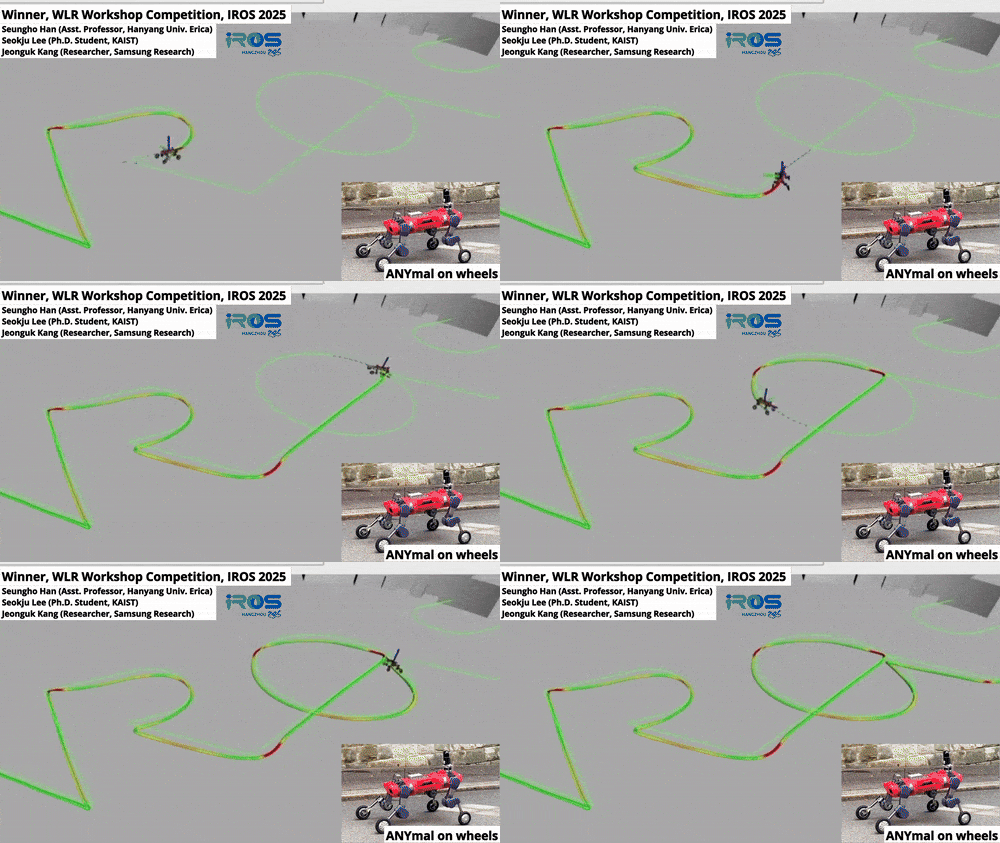
IEEE IROS 2025 Workshop: Wheeled-Legged Robot Competition
Seokju Lee*, Jeonguk Kang*, Seungho Han* (*Equal contribution)
Winner (1st Prize), 2025Path tracking algorithm for wheeled-legged robot using mixture-of-experts. -
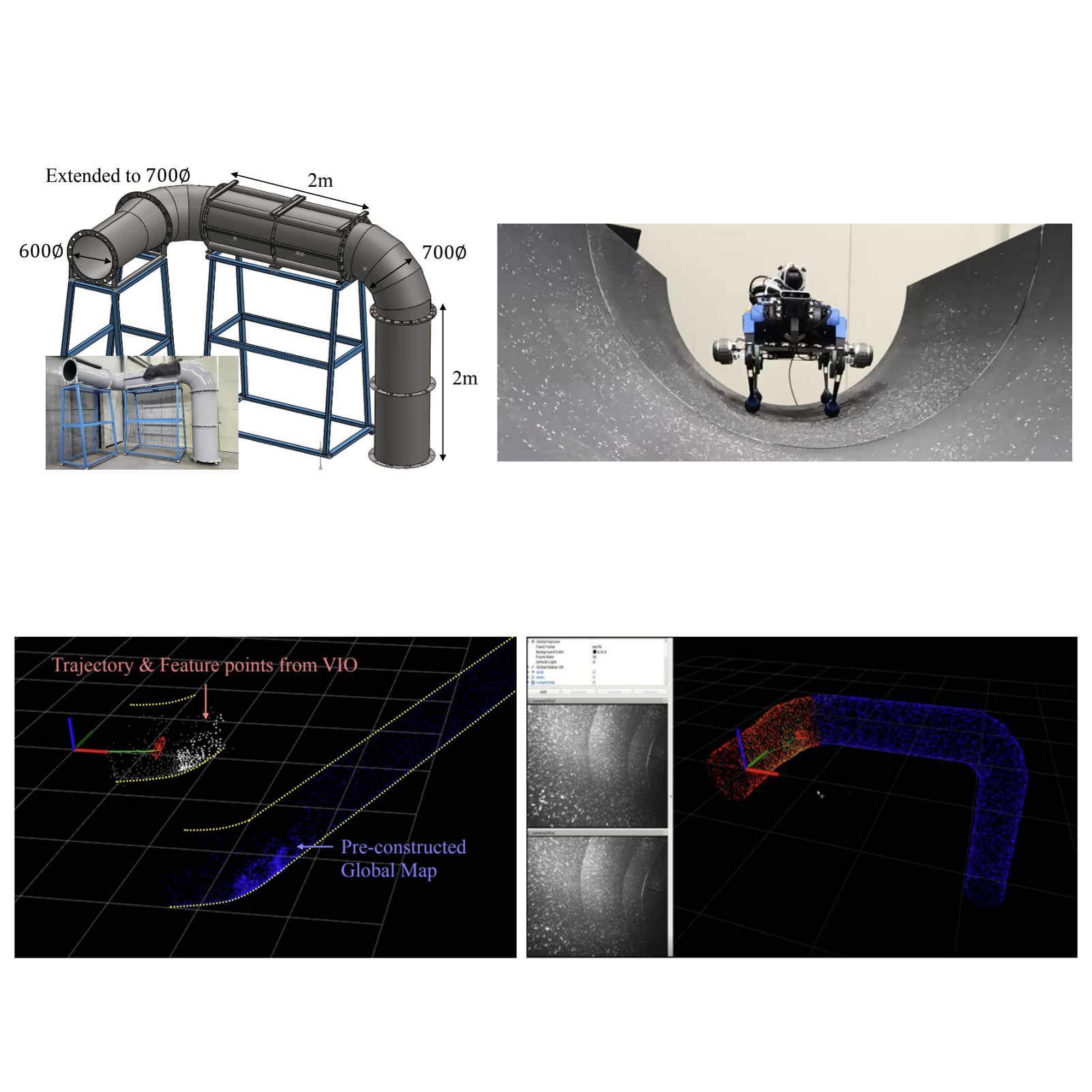
Development of Remote Piping Inspection System with Dual-Mode Locomotion Quadruped Robot
Hyun-Bin Kim, Chanseok Kim, Byeong-Il Ham, Jeonguk Kang, Minseong Choi, Keun-Ha Choi, Kyung-Soo Kim
International Conference on Robot Intelligence Technology and Applications (RITA), 2024
(Best System Paper Award)Visual inspection of the interior of seawater pipelines for discharging waste heat from power plants is essential for the stable operation. However, the confined space and varied internal structures make navigation difficult for both workers and conventional pipe inspection robots. Therefore, we developed a pipe inspection robot system with the following features: a quadrupedal and tracked combined locomotion system, interchangeable inspection modules for specific inspection needs, and real-time localization with an external monitoring program. This design is intended to explore hundreds of meters long piping networks, pass through structures such as butterfly valves, and functional probes, and collect various information to assess the health of the pipelines. The system was tested in model environments to validate its mobility, inspection capabilities, and localization accuracy. -
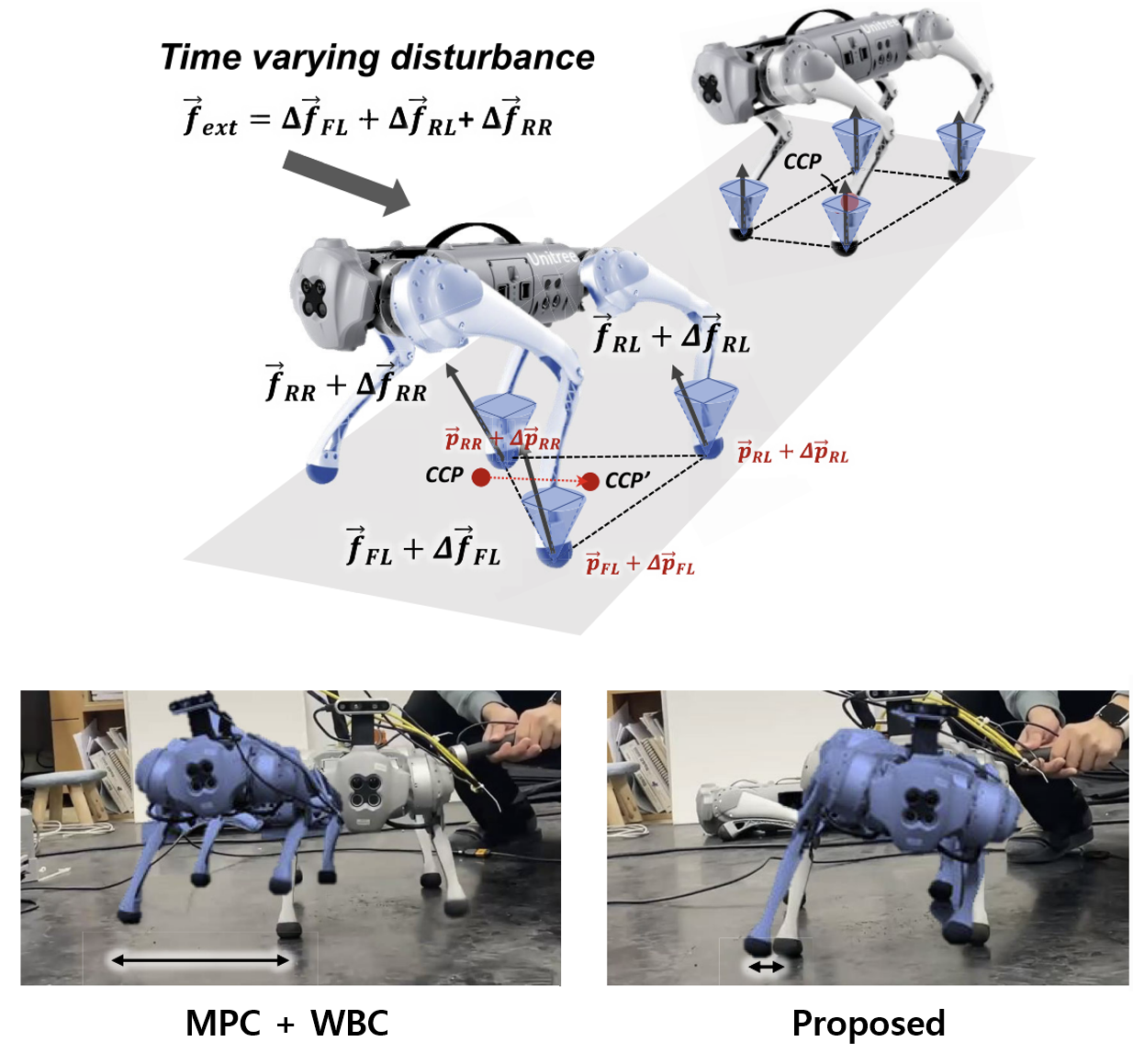
External Force Adaptive Control in Legged Robots Through Footstep Optimization and Disturbance Feedback
Jeonguk Kang, Hyun-Bin Kim, Byeong-Il Ham, Kyung-Soo Kim
IEEE Access, 2024This article studies a robust controller capable of responding to external forces applied to a quadruped robot. Unlike conventional methods, our controller utilizes information about external forces to achieve better performance. We incorporate disturbance feedback into the robot dynamics and calculate a balancing index that considers the estimated force information to ensure coverage of the robot’s support polygon. This approach allows the robot to adjust its legs in response to external forces, redistribute ground reaction forces, and enhance stability, enabling it to handle greater pressures. Additionally, it increases the amount of traction force generated while maintaining posture. These capabilities are expected to maximize disturbance resilience, enhance task performance, and improve stability during interactions with external environments, ultimately contributing to improved mobility of the robot in real-world scenarios. -
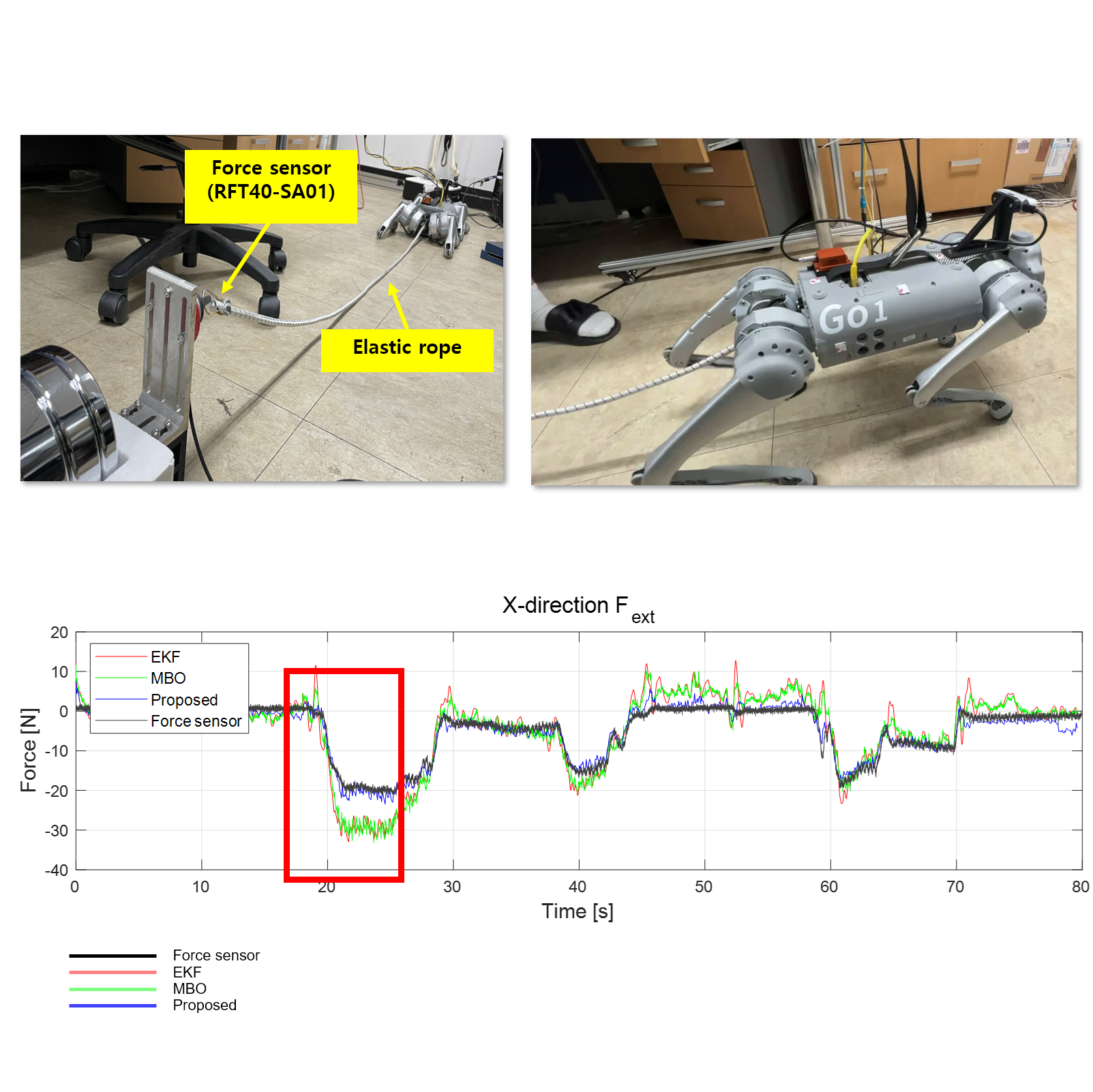
View: Visual-inertial External Wrench Estimator for Legged Robot
Jeonguk Kang, Hyun-Bin Kim, Kyung-Soo Kim
IEEE Robotics and Automation Letters (RA-L), 2023Information about the external wrench in legged robots is crucial for performing interactive tasks. However, most previous research has relied on attaching force/torque sensors to the end-effectors, which has disadvantages in terms of cost and maintenance. Therefore, this article presents a sensorless method for estimating the external wrench on a legged robot. It involves two main steps. First, a nonlinear disturbance observer is used to obtain a noise-reduced ground reaction force estimate. Then, to obtain the applied external wrench value, a factor graph optimization method is implemented to couple the IMU, camera, and estimated leg force data tightly. Unlike the conventional method, the high performance of the optimization approach and the fusion with the exteroceptive sensor improved the estimation accuracy. The effectiveness of the proposed method was verified through several experiments. -
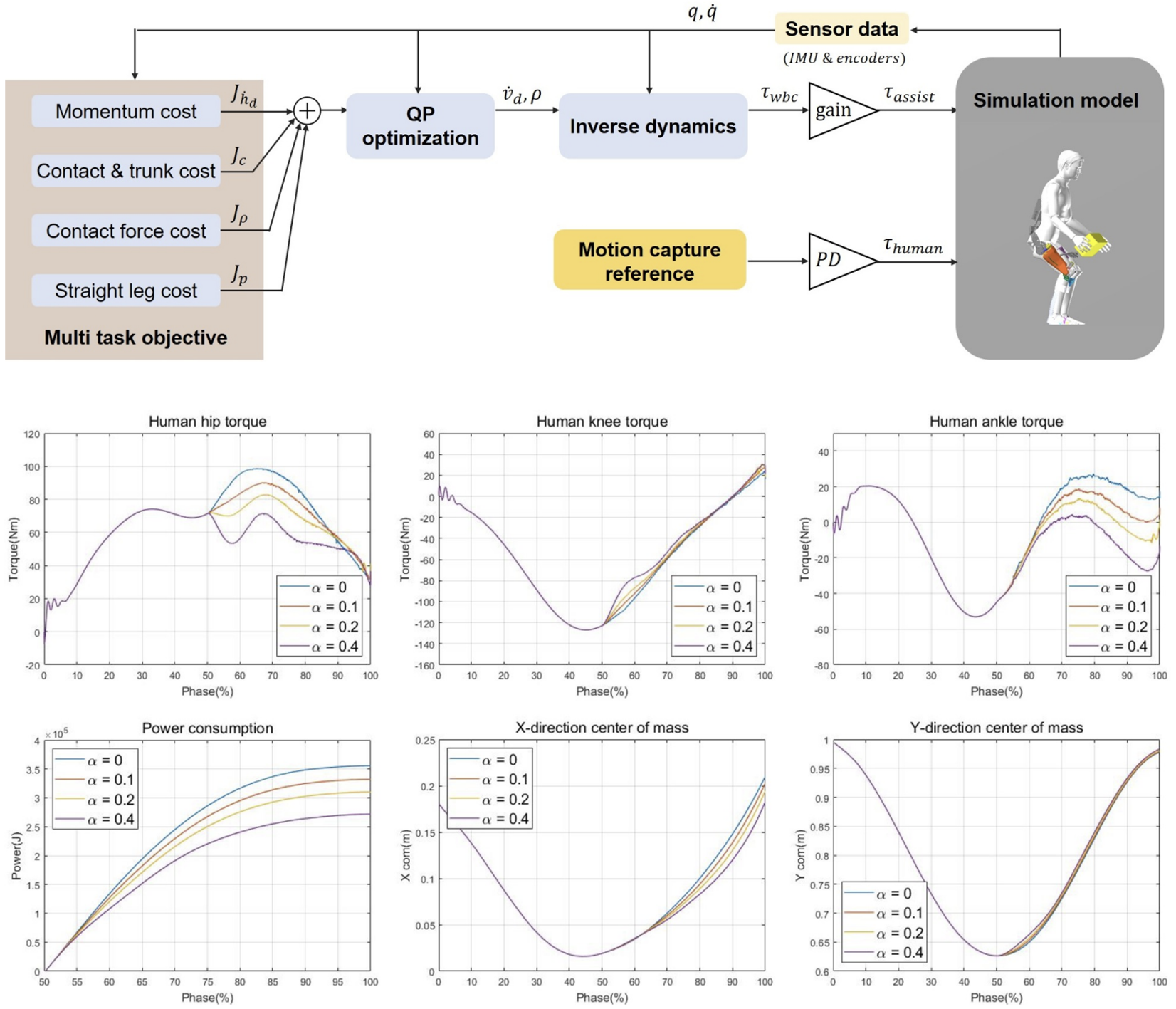
Whole-body Control Based Lifting Assistance Simulation for Exoskeletons
Jeonguk Kang, Donghyun Kim, Hyun-Joon Chung, Kwang-Woo Jeon, Kyung-Soo Kim
International Journal of Control, Automation and Systems (IJCAS), 2023Exoskeletons can help humans in a variety of ways in performing tasks. In particular, during the lifting operation, a human places a great burden on the knee or waist joint, and the exoskeleton can reduce the risks of this task. However, due to the weight of the exoskeleton itself and the movement of the overall center of gravity, balance ability and efficiency may decrease. Therefore, an appropriate assistance torque distribution strategy is required to achieve high performance with the exoskeleton. In order to solve the aforementioned problem, we propose an assistance method based on whole-body control. The proposed algorithm is meaningful because it is different from other simple model-based controllers. The controller fully utilize the dynamics to achieve a high performance. In addition, by adding a straight leg cost term, the singularity problem in the fully extended configuration was solved. This method finds the optimal solution that satisfies various constraints and minimizes the objective functions. Each objective is composed of a balancing-related term that minimizes the variation in the center of gravity, a term that supports the weight of the human and exoskeleton, a term that solves the singularity problem and a term related to efficiency. In this paper, first, a motion capture experiment is performed to analyze a human’s lifting motion. Through this experiment, the trajectory of each joint angle is obtained. With PD (proportional-derivative) feedback from the joint trajectories, the exoskeleton generates human torque in the simulation and implements a lifting operation. Second, a simulation is performed with the proposed controller. As a result, it is confirmed that the proposed method reduces the amount of human joint torque and increases stability and efficiency. -
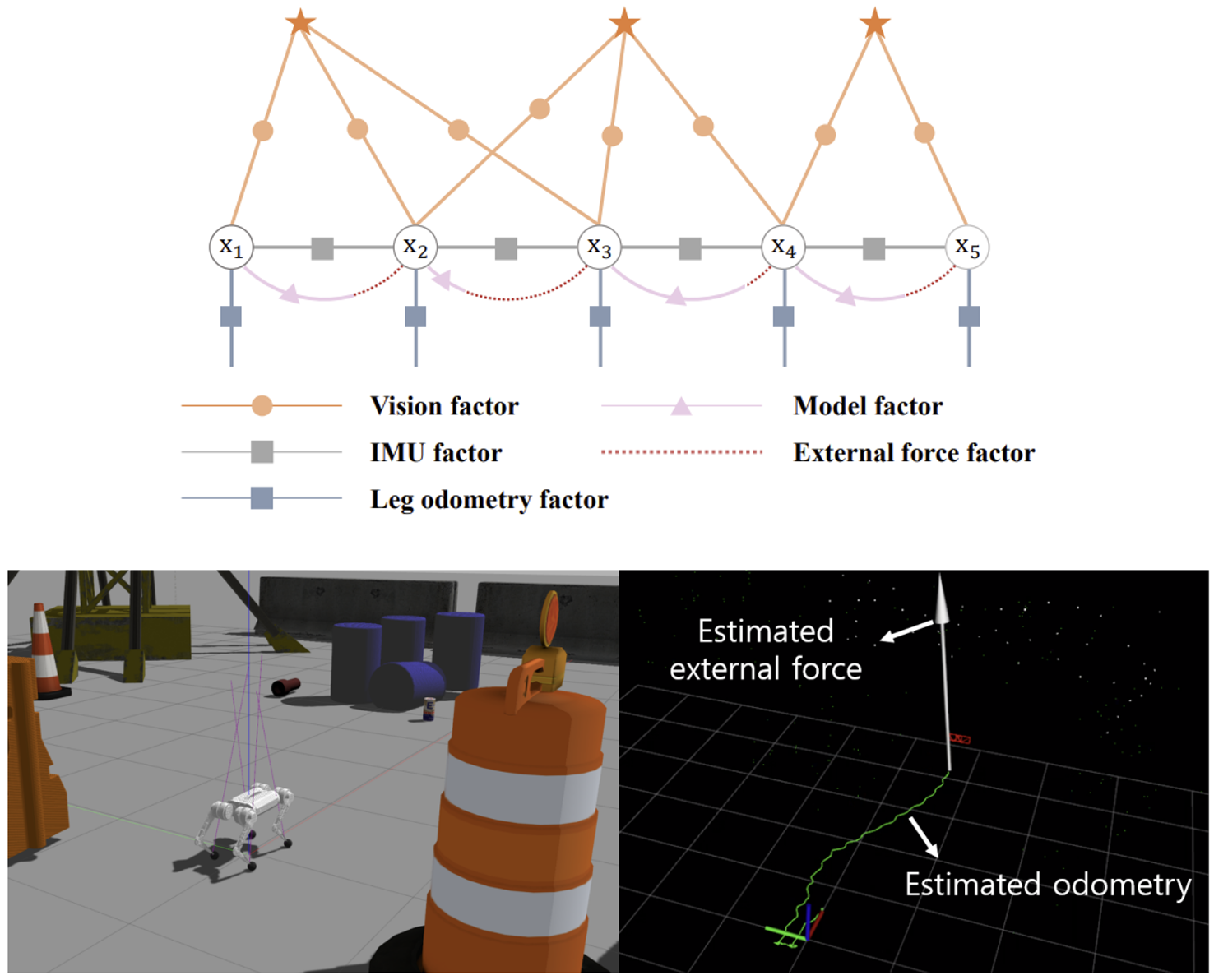
External Force Estimation of Legged Robots via a Factor Graph Framework with a Disturbance Observer
Jeonguk Kang, Hyun-Bin Kim, Keun Ha Choi, Kyung-Soo Kim
IEEE International Conference on Robotics and Automation (ICRA), 2023Recently, legged robots have been used for various purposes, such as exploring unknown terrain or interacting with the world. For control and planning legged systems during interactive operations, it is essential to estimate and respond to external forces. However, in legged system, it becomes difficult to estimate forces due to highly dynamic situations. There are several studies that use a force sensor on the foot and end effector, but these approaches have disadvantages in terms of cost and sustainability. Therefore, in this paper, we propose an improved method for estimating external forces without a force sensor. First, each leg force was obtained using the system dynamics of the robot with a disturbance observer. Then, by preintegration, it was tightly coupled with other sensors to estimate the pose and external force simultaneously. Despite the impact and slip, we estimate external forces accurately in standing and walking motions. Moreover, we compared pose estimation performance with VINS-Mono [1], and there is no significant accuracy degradation in spite of highly dynamic force residual.
Past Projects
-
Whole-body control of a hybrid bipedal robot based on pneumatic and electric actuation 12.2018 - 12.2021
Developed a whole-body controller for a bipedal robot with nonlinear pneumatic actuator.
-
Development of Modular Exoskeleton Technology for Gait Assistance 06.2019 - 02.2024
Developed a lifting assistance strategy based on whole-body control for modular exoskeleton systems.
-
Development of a Quadruped Robot Platform for Seawater Pipeline Inspection 06.2020 - 02.2023
Worked on visual-inertial leg odometry for quadruped localization inside seawater pipelines and reinforcement-learning-based gait selection for long-duration efficient inspection.
-
Hip Assistance Strategy Using Wearable Exo-suit 03.2024 - 12.2024
Worked on deep-learning-based sarcopenia detection and a CMA-ES-based gait assistance strategy for users with sarcopenia.
-
Robotic Manipulation for Healthcare: Automated Ultrasound Scanning 03.2025 - 12.2025
Developed a robotic ultrasound scanning pipeline with visuomotor manipulation and admittance control, enabling autonomous and compliant ultrasound scanning using a UR5e manipulator.